Chapter I: A Revolution of Clay & Charcoal (Peshawar, 1920)
In the Northwest Frontier Province of pre-Partition India, the clay tandoor was a fixture of rural village life, used exclusively by community bakers to bake naan and roti. Kundan Lal Gujral looked at the incandescent charcoal glowing in that earthenware chamber and envisioned something revolutionary.
He impaled seasoned, yogurt-marinated cuts of chicken onto long iron skewers and lowered them into the 500-degree embers. What emerged was a sensation: juicy, crisp-edged, infused with delicate woodsmoke, and radiating aromatic spices. For the first time in documented history, meat had been roasted in a clay tandoor. Tandoori Chicken was born.
Chapter II: From the Ashes of Partition to Daryaganj (1947)
When Partition fractured the subcontinent in 1947, Kundan Lal Gujral arrived in Delhi as a refugee with little more than his culinary vision. Settling in Daryaganj in Old Delhi, he built an earthenware tandoor and established Moti Mahal.
It quickly captured the imagination of the young republic. India’s first Prime Minister, Pandit Jawaharlal Nehru, made Moti Mahal an official stop for visiting international dignitaries—including US President Richard Nixon, First Lady Jacqueline Kennedy, Soviet Premier Nikita Khrushchev, and the Shah of Iran. Maulana Abul Kalam Azad famously declared: “To visit Delhi without dining at Moti Mahal is like visiting Agra without seeing the Taj Mahal.”
Chapter III: The Birth of Butter Chicken & Dal Makhani
It was in Delhi that two more world-defining culinary masterworks emerged from Kundan Lal Gujral’s kitchen:
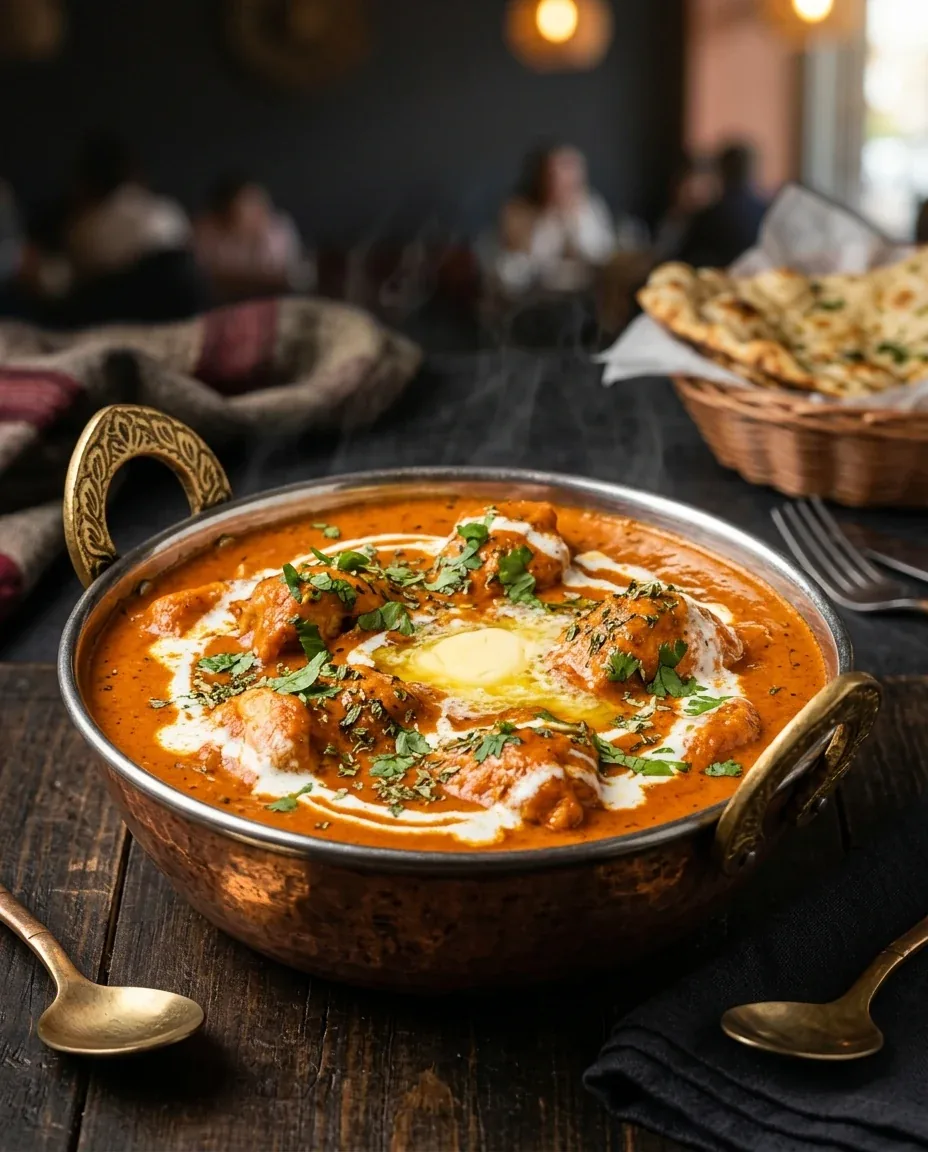
Butter Chicken (Murgh Makhani)
Created to keep roasted chicken tender, folding tandoori cuts into a silky reduction of ripe tomatoes, butter, and cream.
Explore the Legend →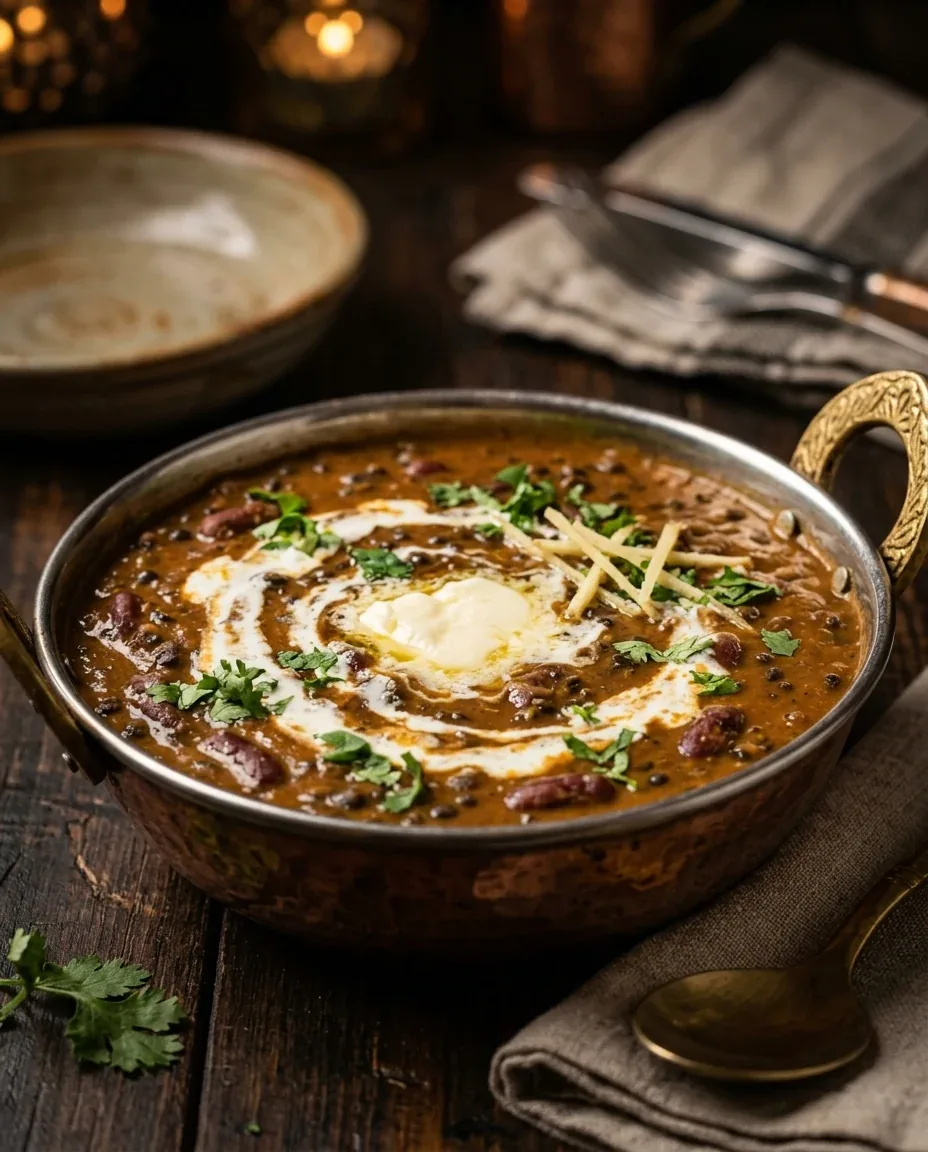
Dal Makhani
Whole black lentils simmered unhurriedly through the night over the dying charcoal embers, finished with farm butter.
Explore the Legend →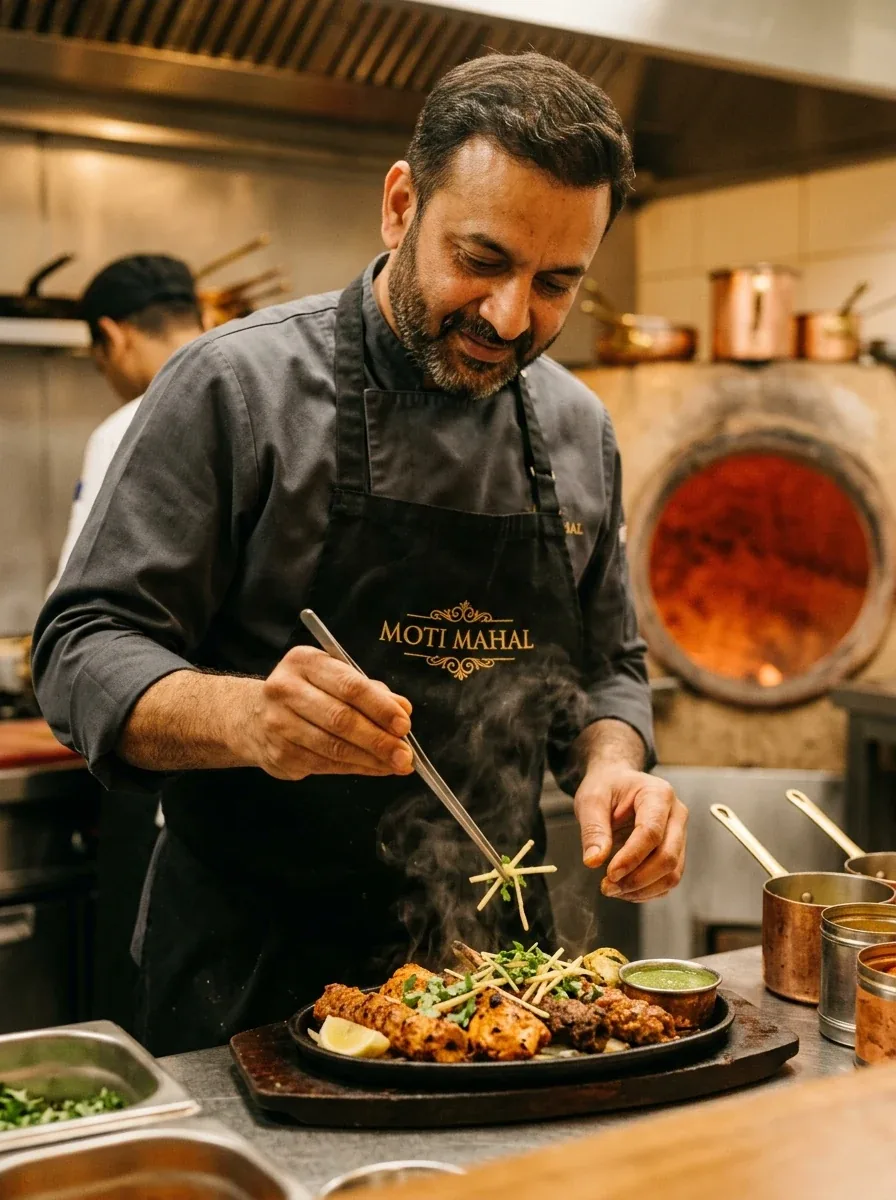
Chef-Led Lineage
Under Chef Rajender Negi with fifteen years of Moti Mahal service, every marinade and pot preserves exact heritage standards.
Chapter IV: The Flame Rekindled in Indirapuram
A hundred years after that first chicken was lowered into an earthen oven, that same reverence for craftsmanship lives at Shop No. 10B, Windsor Street Market, Indirapuram.
We continue to fire our ovens with real hardwood charcoal. We refuse pre-packaged pastes and synthetic food colouring. We measure time in hours rather than minutes. When you sit at our table or unpack a meal at home in Ghaziabad, you are tasting unbroken culinary history.
Frequently Asked Questions
Who was Kundan Lal Gujral?
Kundan Lal Gujral was the visionary founder of Moti Mahal. In 1920 in Peshawar, he pioneered cooking marinated poultry inside the clay tandoor. He later invented Butter Chicken (Murgh Makhani) and slow-cooked Dal Makhani, becoming one of the most influential figures in Indian culinary history.
How did Moti Mahal come to Delhi?
Following the Partition of India in 1947, Kundan Lal Gujral migrated to Delhi and established Moti Mahal in Daryaganj. It rapidly evolved into an iconic culinary salon frequented by Prime Minister Jawaharlal Nehru, Indira Gandhi, and visiting foreign heads of state.
How is that original lineage preserved in Indirapuram today?
At Shop 10B, Windsor Street Market, Indirapuram, under veteran executive chef leadership, we maintain the exact original spice formulations, overnight lentil simmering in copper degchis, and authentic charcoal tandoor roasting without modern industrial shortcuts.